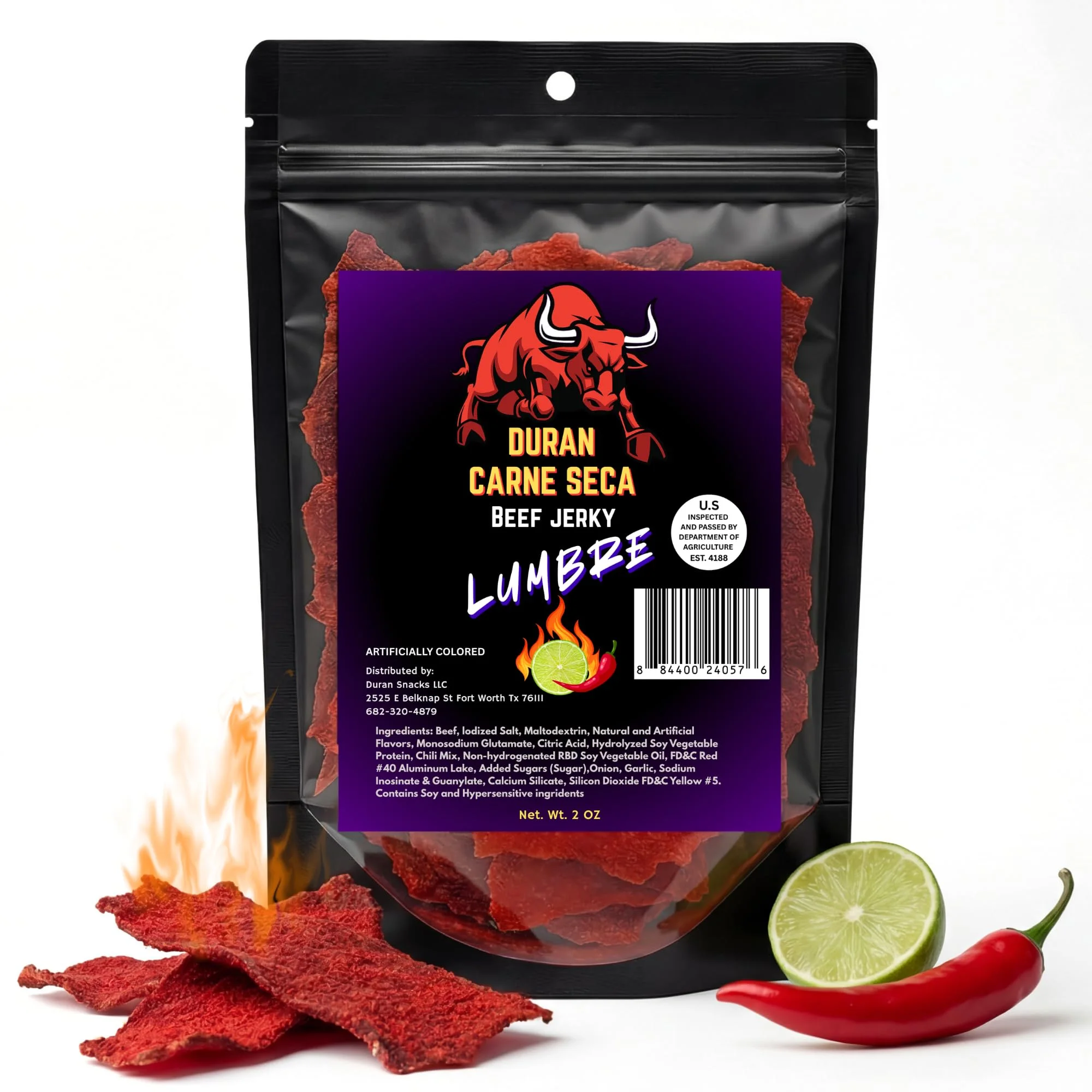

Two ways to dry beef
Jerky as most Americans know it is a thick strip, often sweet, that you chew for a while. Carne seca, the dried beef of northern Mexico, is cut much thinner and dried further, until a strip snaps when you bend it. You eat it in a few crunchy bites, or you crumble it over eggs, beans and fries.
Both are old foods. USDA FSIS notes that the word jerky itself comes from charque, a Spanish word for dried meat, so the two names point back to the same idea: take the water out of meat so it keeps.
Our Lumbre carne seca follows the thin, crisp style. Duran Snacks makes it in Fort Worth, Texas, and every strip is dusted with Lumbre Fuego, the same chile-lime powder we sell in the jar.
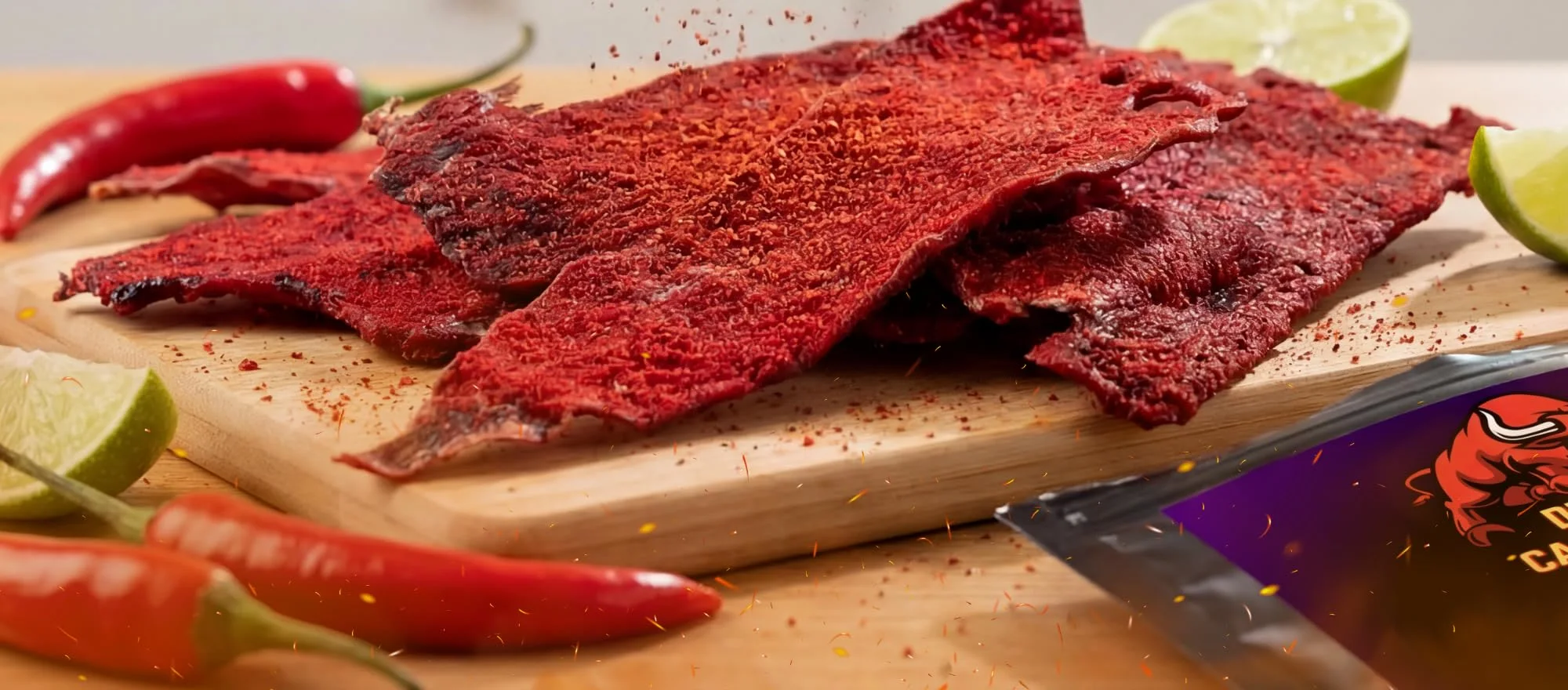
Why it keeps without a fridge
Drying is the whole trick. FSIS explains that a pound of meat weighs about four ounces after drying, and with most of the moisture gone, jerky can be stored without refrigeration. Its shelf-stable food page lists jerky next to canned goods and spices as foods that keep at room temperature.
Salt helps too. FSIS writes that salt binds water so it is not available to microorganisms. That is part of why a dried, seasoned strip lasts on a shelf for months.
Commercial jerky is made under inspection. According to FSIS, the drying process in commercial jerky is monitored in federally inspected plants by its inspectors. Look for the establishment number on the package: on our pouch it is EST. 4188.
| Kind | On the shelf | After opening |
|---|---|---|
| Commercially packaged jerky | 12 months | No time given |
| Home-dried jerky | 1 to 2 months | No time given |
What the date on the pouch means
FSIS is blunt about dates on shelf-stable food: they are for quality, not safety, and federal law requires them only on infant formula and some baby food. A pouch past its date is not automatically unsafe, but the crunch and the bright lime flavor fade with time.
For the best bite, eat carne seca well inside its date, and keep the pouch somewhere cool and dry, away from the stove.
After you open it
Here the agencies are quiet. The FSIS storage chart gives commercially packaged jerky 12 months on the shelf and lists no time at all for an opened package. So we will not invent one.
What we do know is what air does to a crisp strip: it pulls in moisture and goes leathery. Press the zipper shut after every handful, squeeze the air out, and finish the pouch within a few days. If a strip smells off or shows mold, throw the pouch away.
Making your own
If you dry beef at home, FSIS has specific advice: heat the meat to 160°F before drying, then dry it at a steady 130°F to 140°F, because a dehydrator alone may not get the meat hot enough to kill bacteria. Home-dried jerky keeps 1 to 2 months, according to the same chart. Dust it with Tizon after drying, not before, so the lime stays bright.
Carne seca vs jerky is one of three notes by the Tizon studio.